AI-Generated Photos in Retail: What Customers Really Think
This study is one of the latest examples of the applied research conducted at the Münster School of Business at FH Münster. Rooted in real-world marketing challenges, it reflects the programme's commitment to producing insights that are relevant, rigorous and immediately useful for practitioners. Research like this is not just published, it shapes how we teach, discuss and think about the future of marketing in our classrooms.
AI-generated imagery has become a fixture in advertising and retail communication, valued for its speed and cost efficiency compared to traditional photo production. But how do customers actually feel about it? And does it affect how they see a brand or decide what to buy? A student research team at the Münster School of Business at FH Münster set out to find answers.
The Study
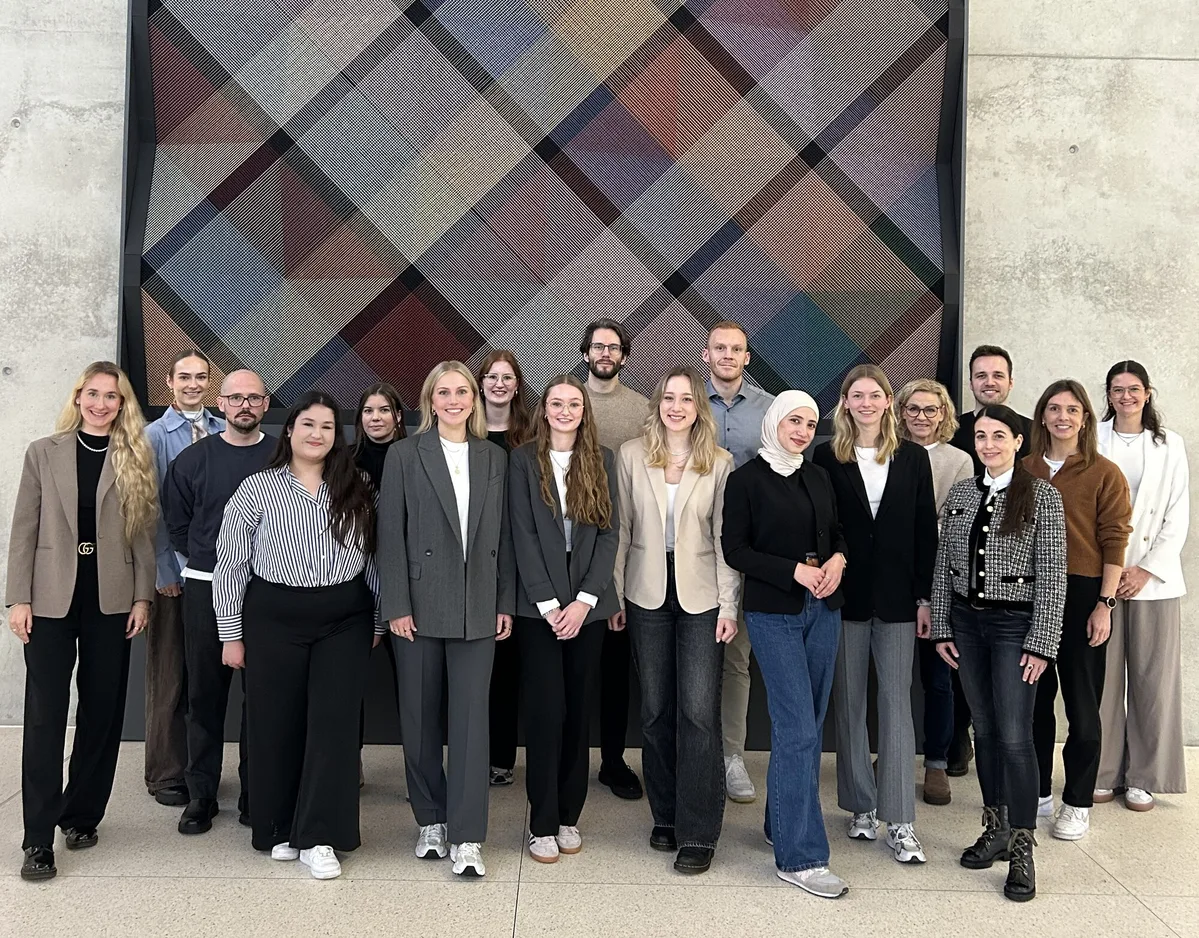
Six students from the IMS Master and the IB&M Bachelor programmes collaborated with textile retailer Ernsting's family to investigate how AI-generated product photos land with customers in the fashion retail space. The team analysed the emotional impact of AI imagery, its relevance to purchasing decisions and how it compares to real photography. The project was supervised by Prof. Dr. Carmen Maria Albrecht and doctoral researcher Elisa Storz from the Center for Consumer Insight & Retail Excellence (CECIRE) at the Münster School of Business.
What the Research Found
The results were telling. Around 70 percent of participants correctly identified AI-generated imagery, with younger respondents doing so more reliably than older ones. When person-based photos were recognised as AI-generated, the emotional impact dropped and brand perception became more critical, though purchasing intent was less strongly affected.
Decorative motifs were judged less harshly than AI-generated images of adults or children. One finding stood out in particular: while real baby photos triggered stronger positive emotional reactions, many participants in the qualitative interviews expressed a clear preference for AI-generated images of children, specifically out of concern for child protection. As IMS student Yara Müser noted, "Many participants showed a clear preference for AI-generated children's motifs, particularly to protect the children involved."
What It Means in Practice
For Ernsting's family, the findings offered concrete guidance. Caroline Böhmer, Director of Marketing and Visual Merchandising, highlighted that the results provide valuable direction for using AI responsibly without compromising customer trust or the values of a family business. A key recommendation from the student team: AI-generated images need to meet at least the same quality standards as real product photography, and ideally surpass them.